Description
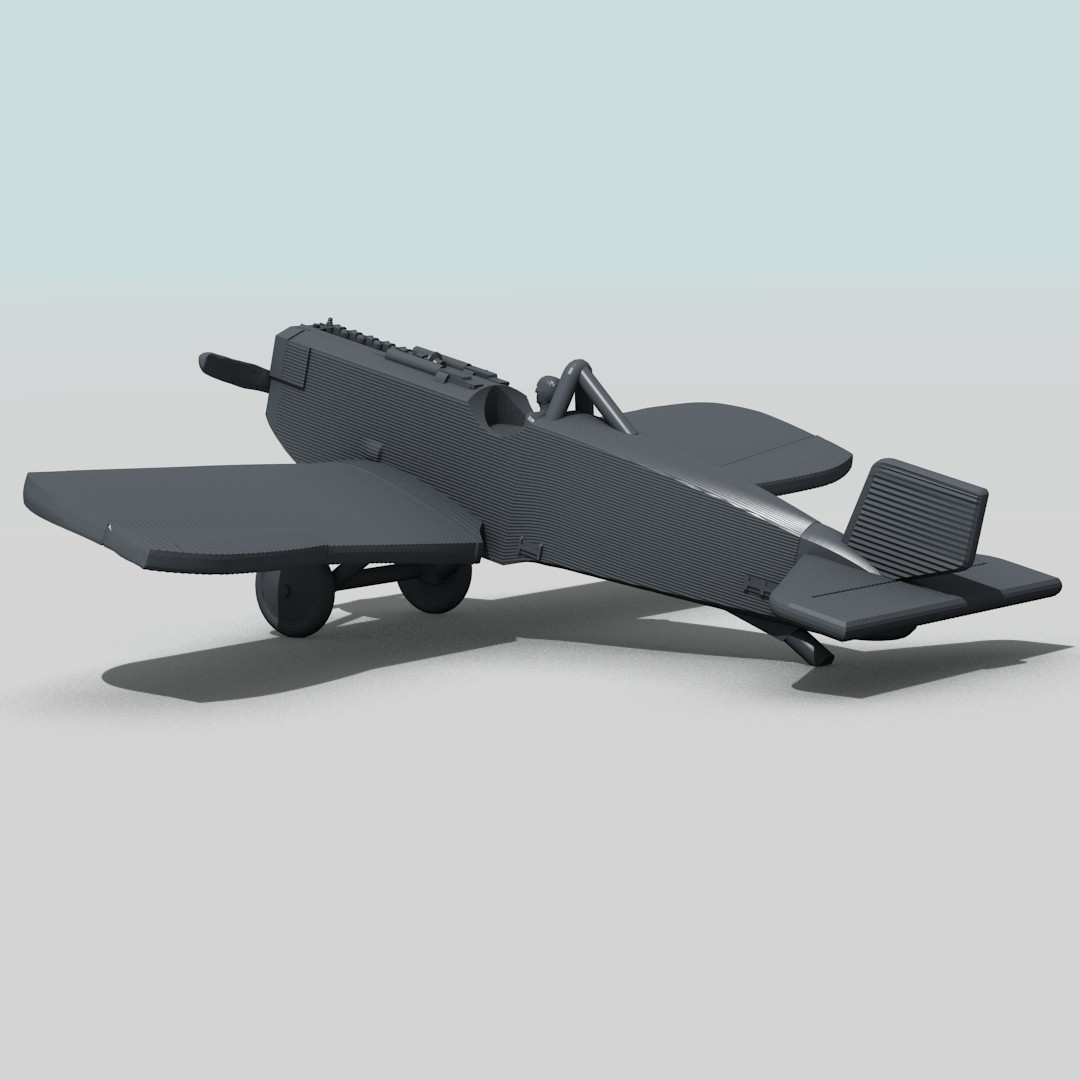
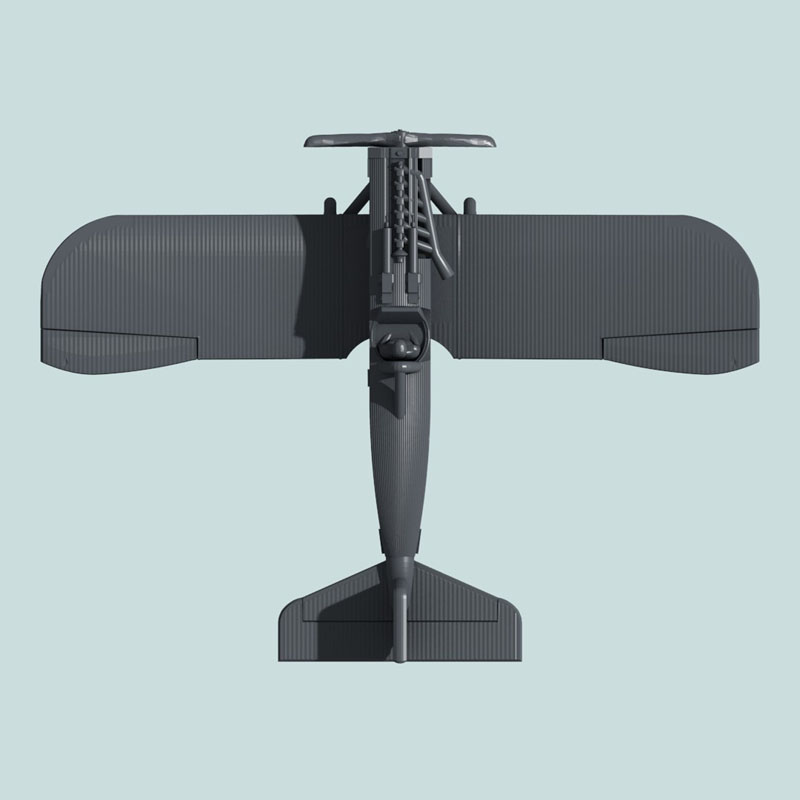
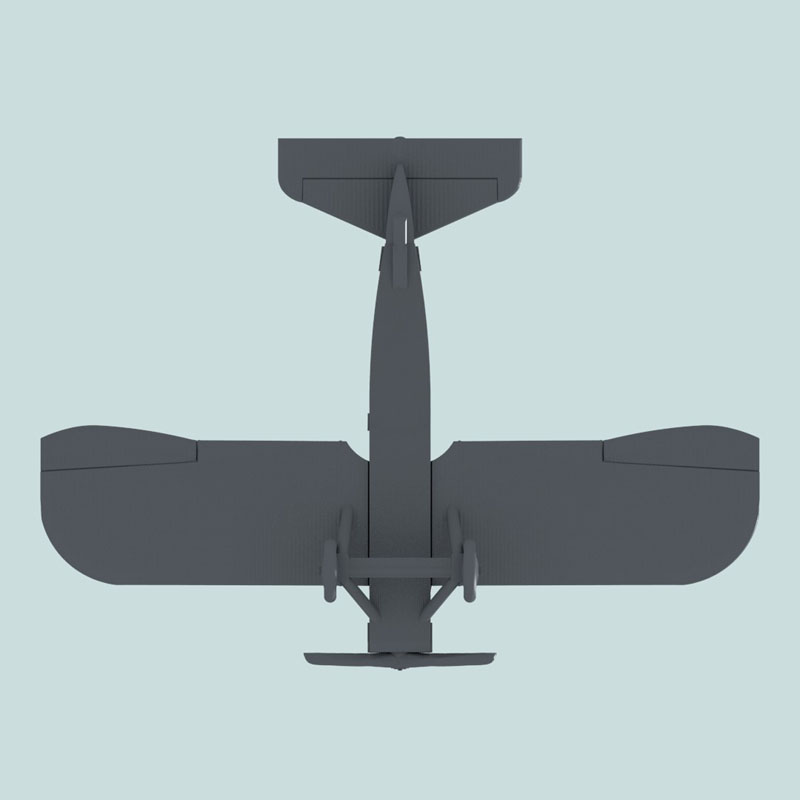
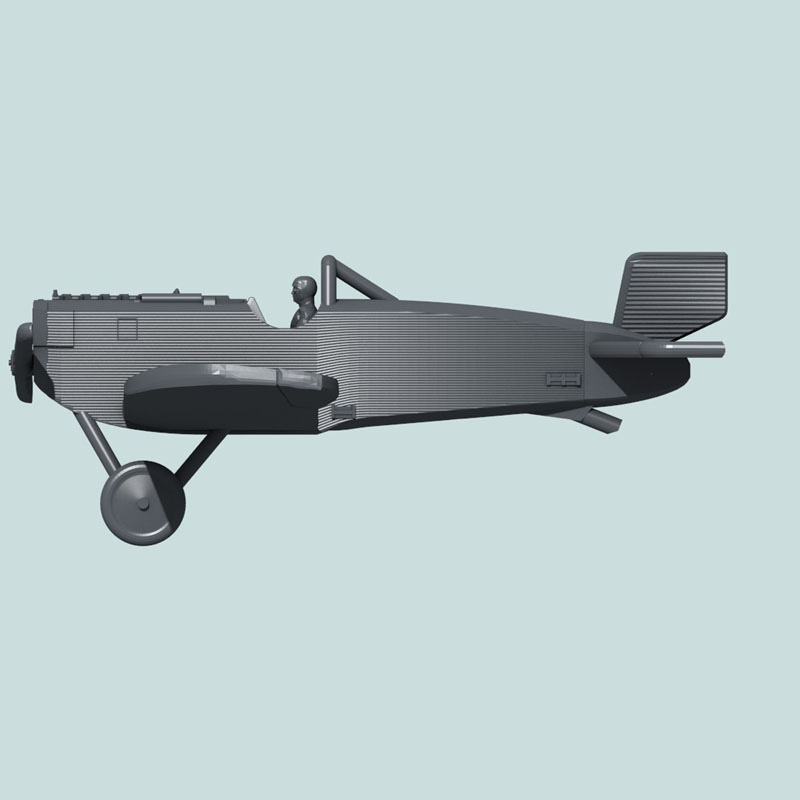
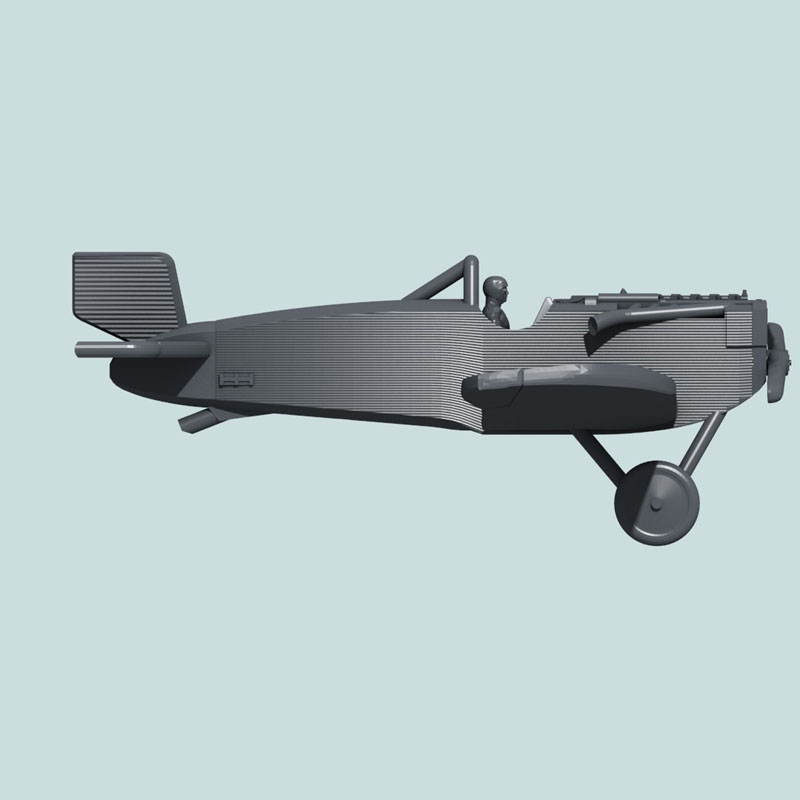
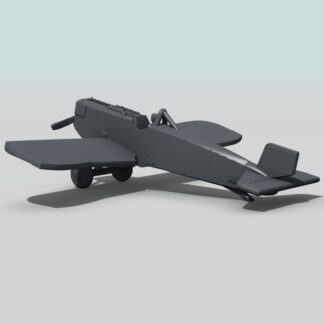
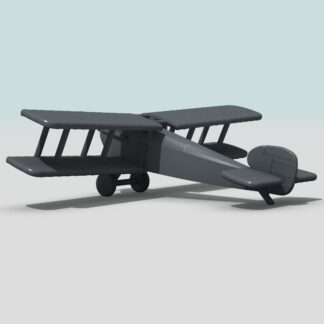
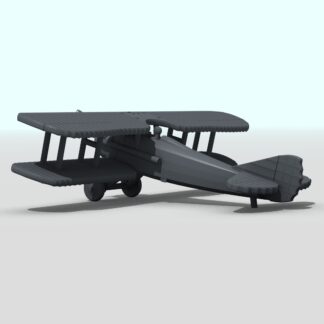
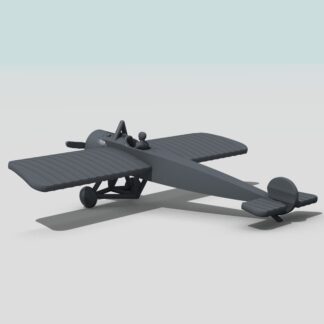
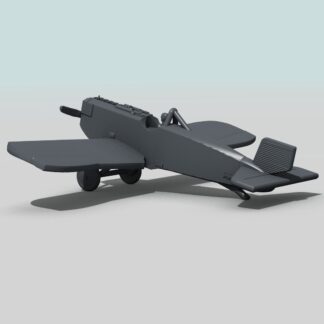
This is a paintable 1:144 scale model of a Junkers D.I with the short fuselage. A version with the long fuselage is also available. Since many painters choose their own mounting system, no peg is included on the plane. Pegs can be purchased separately in the Accessories section of this catalog.
The revolutionary all-metal Junkers D.I was derived from two Junkers prototypes: the J.7 and the J.9. Test pilots described it as “at least as maneuverable as the Albatros D.III or D.V”, but front-line pilots were skeptical of a low-wing monoplane. This may by attributed to built-in prejudices, but it may also be a reflection of the D.I’s limited downward visibility. In the latter half of 1918 the Germans were usually outnumbered and frequently resorted to quick diving attacks on Entente formations with a quick zoom away without becoming entangled in a dogfight. Limited downward visibility would be a limitation to such tactics — a limitation not suffered by the contemporary high-wing Fokker D.VIII.
After the initial batch was built, vibration problems forced Junkers to shorten the fuselage, and D.Is trickled their way to the front in both configurations. Though forty were ordered from the parent company, twenty seven were completed by the time production stopped in early 1919. Junkers-Fokker completed another thirteen (of an order of twenty).
It is still a point of debate on how many — if any — of the D.Is saw combat service during WWI, but they did serve in Poland during the conflicts with the Bolsheviks, where their weather-proof and robust construction was greatly appreciated.
For more data and gaming info on this plane, see https://linen.miraheze.org/wiki/Junkers_D.I.
Shipping: Shipping varies from about US$7 to US$15 per order, depending on the destination country. See your cart for an exact number — the prices may vary with currency fluctuations. Orders over US$300 may get free shipping (but see the note on mixed materials).
Mixed Materials: Nylon prints are shipped from a different factory than resin prints, so if you place an order with a mix of Nylon and Resin, you will be charged shipping for each material, and each will arrive separately.
Taxes: Sales tax — where applicable — will be added for U.S. shipments. Value-added taxes (VAT) may (or may not) be collected by your postal carrier on receipt, which is known as “Delivery At Place”. Unfortunately, since my printing and shipping partner has no way of marking shipments as VAT-paid, this website cannot collect VAT on your behalf.
Customs: Most orders should be small enough to avoid customs duties, but you may want to check your local regulations. If duties are due, they may be collected by your postal carrier. E.U. customers may be able to avoid duties by keeping their order under €150.
No refunds are available, because your order is custom-printed when it is received. There is no inventory or stock to which it can be returned.
Reprints are available for planes damaged during shipping. See https://www.greatwarplanes.com/refund_returns/ for details.
Grey Resin: Models printed in Grey Resin material are printed with sprue-style supports while they are printed. The supports are removed in the factory before shipping. But be aware that some of the supports might be missed if they are mistaken for plane parts, and some of the attachment points might need smoothing before painting. I have seen good results — with almost no visible leftovers — in test prints. But this may not be universal because it depends on whoever is operating the printer the day your miniature is printed.
Bent Wings: Due to the need to protect miniatures during shipping, the miniatures may arrive with wings that are not perfectly straight (or, in the case of wings with dihedral, at the right angle)¹. If the warping is too severe, or if correcting it results in a broken plane, you can apply for a reprint as outlined above. To correct modest warping, you can heat the model with hot water or with a blow-dryer until the wings become pliable, straighten them, and then cool the model with cool water or room-temperature air. (I have used the blow-dryer method with good success.) I do not know what temperature is best — you’ll have to experiment, starting on the low side and using only gentle pressure. You just want to make the model pliable without it melting (too hot) or breaking under gentle pressure (too cool). Please use the normal precautions you’d use with any operation with hot water, air, and plastic.
Since — as you have gathered — you can bend the model when it’s under high temperature, I would suggest avoiding leaving your prints in a very hot environment such as a locked car under the summer sun.
¹ This was especially true during a period when the planes were shipped in a clamshell-plastic case, which should no longer happen.