
Posted on

New Miniatures: The Junkers D.I

The revolutionary all-metal Junkers D.I was derived from two Junkers prototypes: the J.7 and the J.9. Test pilots described it as “at least as maneuverable as the Albatros D.III or D.V”, but front-line pilots were skeptical of a low-wing monoplane. This may by attributed to built-in prejudices, but it may also be a reflection of the D.I’s limited downward visibility. In the latter half of 1918 the Germans were usually outnumbered and frequently resorted to quick diving attacks on Entente formations with a quick zoom away without becoming entangled in a dogfight. Limited downward visibility would be a limitation to such tactics — a limitation not suffered by the contemporary high-wing Fokker E.V.

After the initial batch was built, vibration problems forced Junkers to shorten the fuselage, and D.Is trickled their way to the front in both configurations. Though forty were ordered from the parent company, twenty seven were completed by the time production stopped in early 1919. Junkers-Fokker completed another thirteen (of an order of twenty).

It is still a point of debate on how many — if any — of the D.Is saw combat service during WWI, but they did serve in Poland during the conflicts with the Bolsheviks, where their weather-proof and robust construction was greatly appreciated.

Three new full-color and two new paintable Junkers D.I miniatures are now available at Great War Planes by Reduced Aircraft Factory.

Computer render
Computer render
Posted on

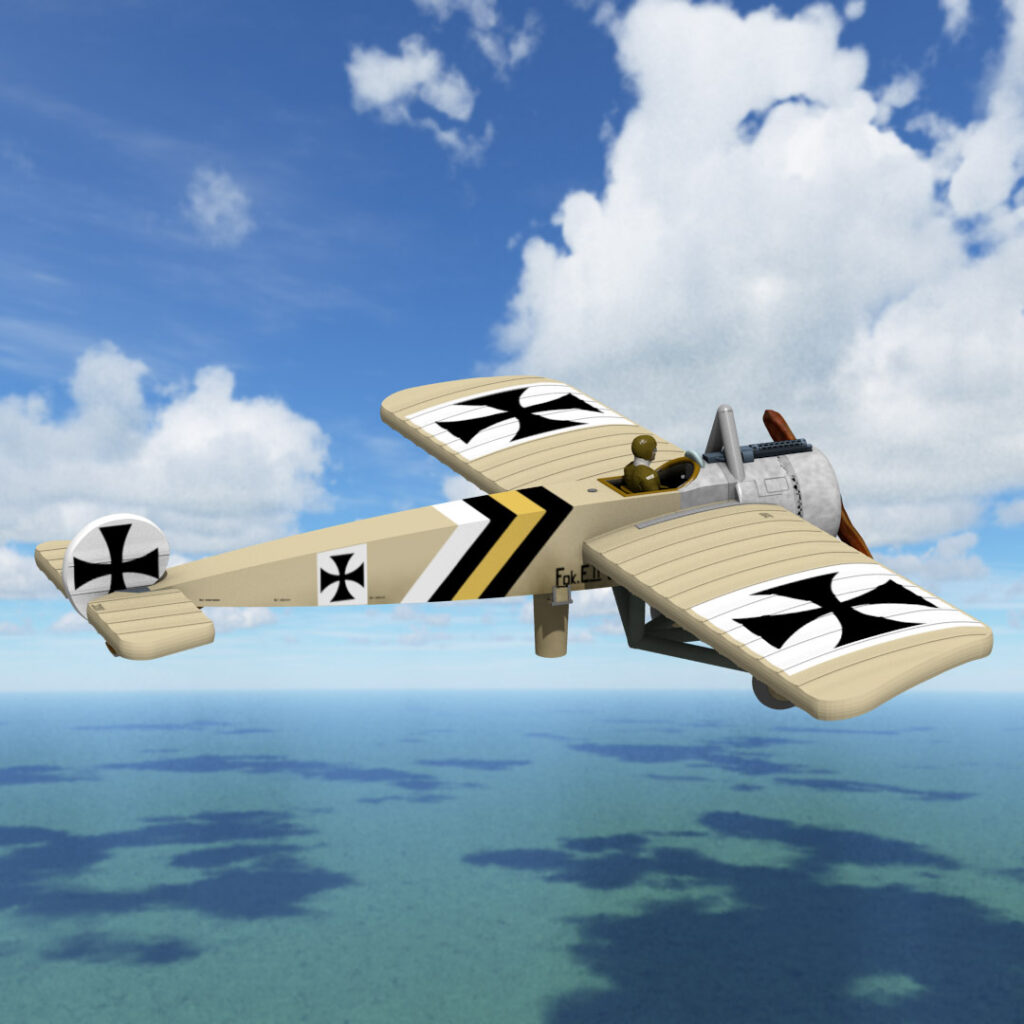
New Miniatures: The Fokker E.I and E.II

The Fokker E.I as Germany’s first fighter aircraft, with a synchronized machine gun firing through the propeller arc. Its successor, the E.II, featured an upgraded 100hp Oberursel U.I engine to give a bit of extra power over the original 80hp U.0. Many of Germany’s top aces started on the E.I or E.II or their more-common successor the E.III.

Six full-color 1:144 Fokker E.I and E.II miniatures are now available from Great War Planes by Reduced Aircraft Factory. They make great additions to an early-war collection for WWI airplane gaming.

Computer render
Computer render
Posted on

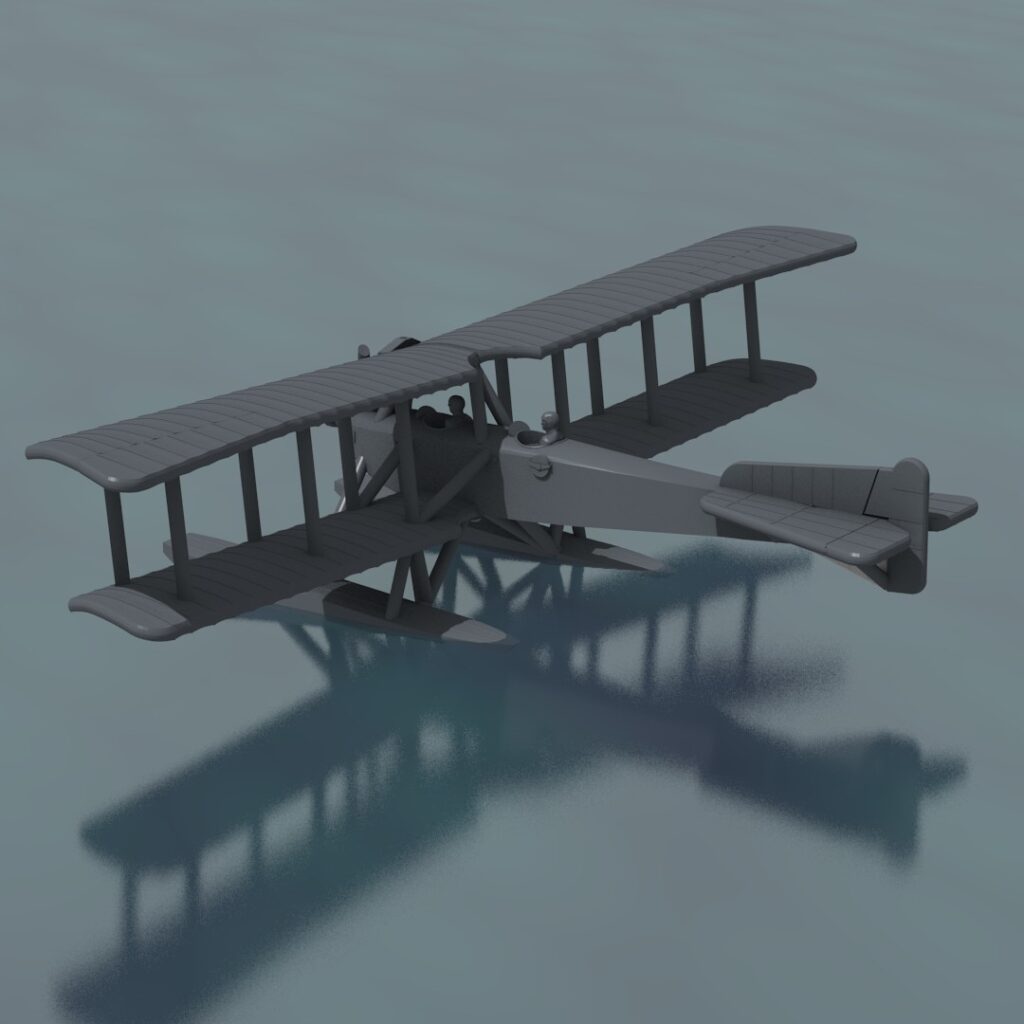
New Miniatures: The L.V.G. C.VI

Now that my informal “Naval Aircraft Month” is over, time to get back to the normal work of restoring full-color miniatures to availability.

Luft-Verkehrs Gesellschaft m.b.H. (L.V.G.) produced aircraft throughout the war, including the excellent L.V.G. C.V of 1917. The LVG C.VI was a refinement of that aircraft, using the same Benz Bz.IV engine. Servicing was simplified and the view from the cockpit was improved. It was found to be an excellent two-seater, and roughly 1,000 were produced. 400 were in service in August 1918. By the end of the war, it was on track to become the most common German two-seater.

Three full-color 1:144 miniatures and one paintable miniature are now available for the L.V.G. C.VI at Great War Planes by Reduced Aircraft Factory.
Computer render
Computer render

.

Posted on

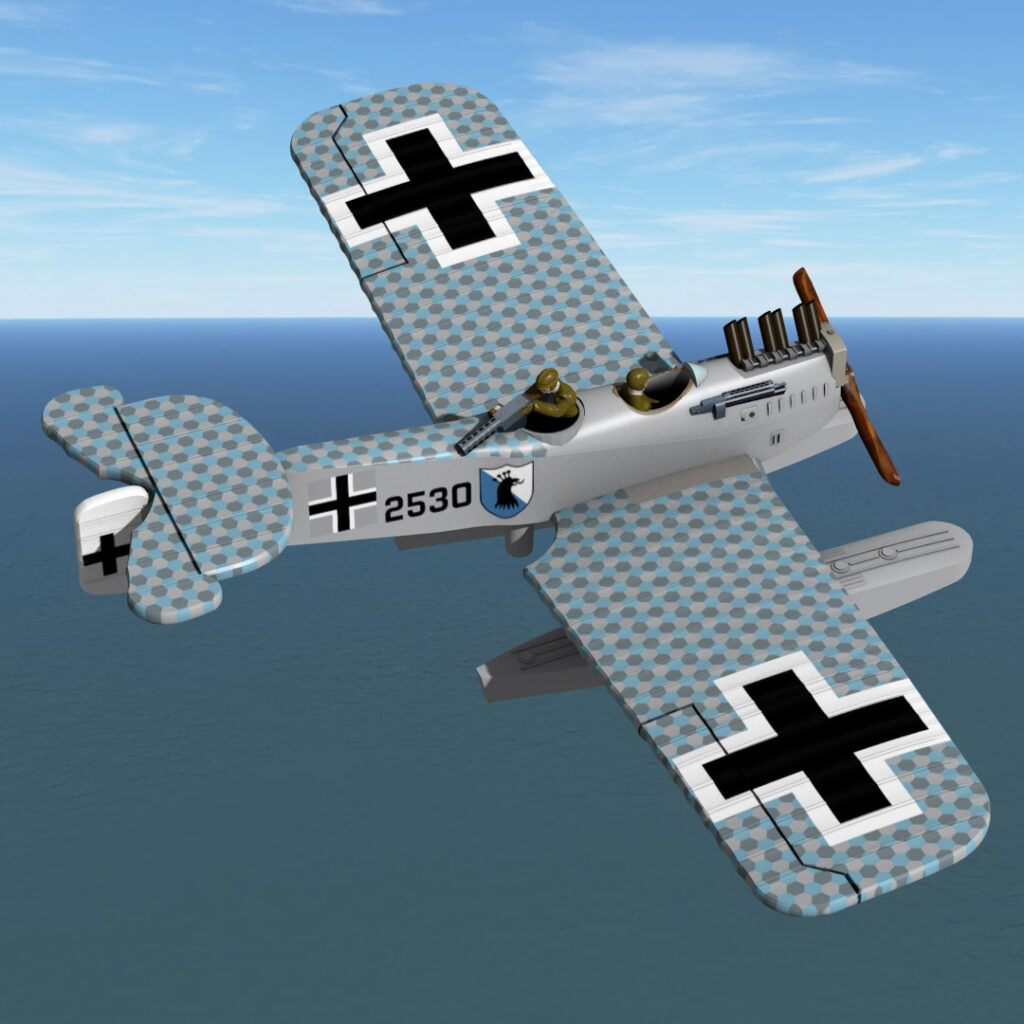
New Miniature: The Friedrichshafen FF.33e

The Friedrichshafen FF.33e was another in the long line of seaplanes, this one using the reliable 150hp Benz Bz.III engine. It is the first FF.33 model with a rear under-fin rather than a rear float. Like about half the FF.33 models, this plane was fitted with a radio (transmitter only) rather than a rear gun, though sometimes the radio was replaced with a rear flexible Parabellum. The FF33 was said to be easy to fly and it handled well on the water as well, and the FF.33e was the most common of the Friedrichshafen seaplanes.  The most famous FF.33e was number 841, the Wölfchen, which accompanied the SMS Wolf on its long raiding voyage through the Pacific and Indian oceans of November 1916 through February 1918.

The first three prototypes, where were ordered in March 1915, were originally named the Friedrichshafen FF.33c, but they were subsequently renamed as FF.33e’s as the production run began. In May 1917, 121 FF.33e seaplanes were in service.

A paintable 1:144 Friedrichshafen FF.33e miniature is now available from Great War Planes by Reduced Aircraft Factory.
Computer render
Computer render
Posted on

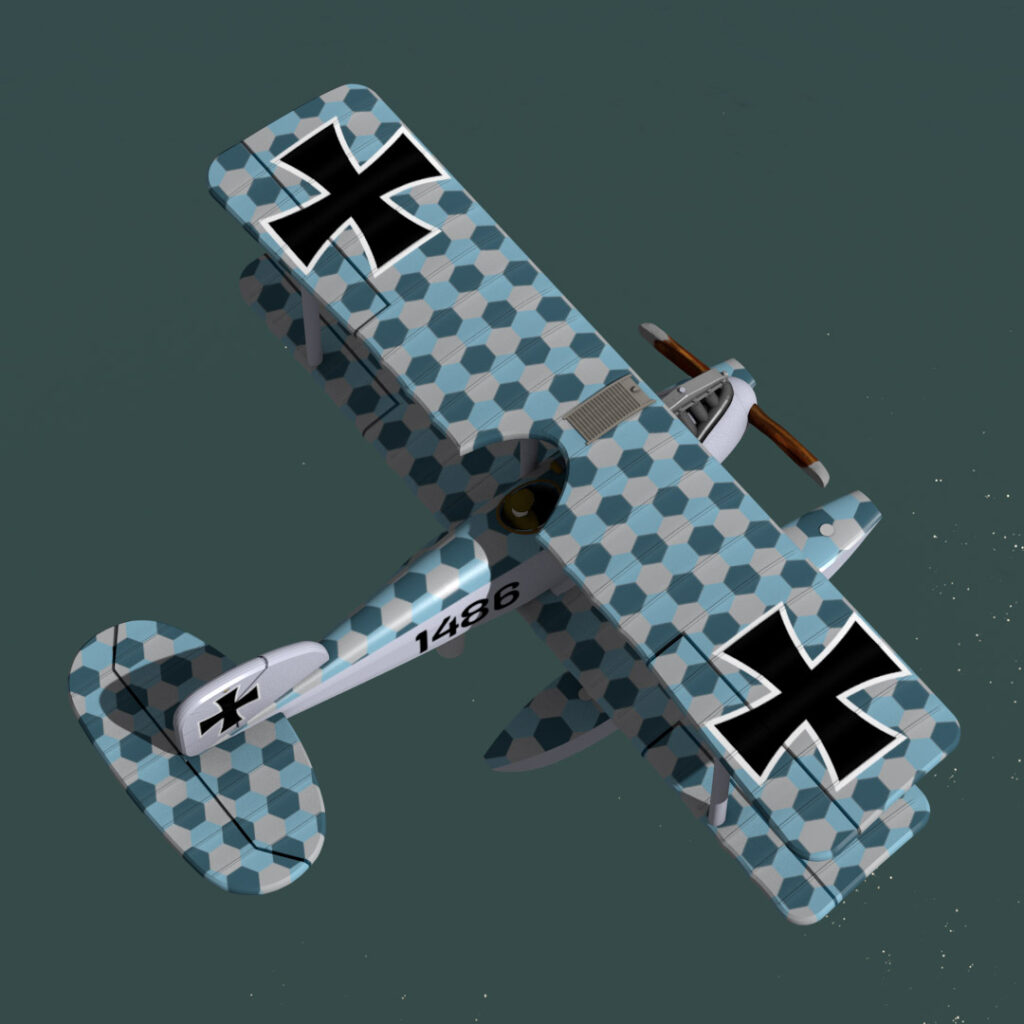
New Miniatures: The Hansa-Brandenburg W.29

The Hansa-Brandenburg W.29 was an innovative monoplane developed from the W.12. It retained and improved on the maneuverability of the W.12, but it was still limited in range and sometimes relied on the Hansa-Brandenburg W.19 to scout out targets. W.29’s were known to take on even Sopwith Camels, as a battle of 18 July 1918 demonstrated.

About three-quarters of W.29’s built were armed with two forward-firing machine guns (156 of 199), aka the C3MG. The rest substituted a radio for the second fixed machine gun, and they were known as the C2MGHFT. The 150hp Benz Bz.III was the most common engine, but the 185hp Benz Bz.IIIa and 170hp BMW.IIIa were also used in smaller numbers, but their supply may have been limited by the high demand for those engines in other aircraft.

It operated with great success, especially out of the base at Zeebrügge. Twenty-five W.29’s were dispatched to Turkey, but it is uncertain whether they ever arrived and whether they were used by German or Turkish pilots (if anyone). Austria-Hungary ordered twenty-five from UFAG, but only one was delivered before the Armistice, taking its first flight on 25 Oct 1918.

Two paintable and three full-color Hansa-Brandenburg W.29 miniatures are now available at Great War Planes by Reduced Aircraft Factory.
Computer render
Computer render
Posted on

New Miniatures: The Albatros W.4

As a response to the rising threat of Entente flying boats, the German navy developed several Jagdeinsitzer Wasser (Seaplane fighting scouts) in 1916, including the Albatros W.4. Though it was derived from the Albatros D.I, many details were changed (beyond the obvious addition of floats), such as a wider wingspan and wider gap. Various types of floats were tried as production ran along, and 118 were built before they were supplanted by Brandenburg types.

The first W.4 was delivered in September 1916, but initial production was slow, with the first ten arriving in Feb-April 1917. Eventually 118 would be delivered, some with an offset wing radiator rather than ear radiators, and some with four-wing ailerons. They served mostly on the Flanders coast, but some were seen over the Aegean.

Two paintable and three full-color 1:144 Albatros W.4 miniatures are now available from Great War Planes by Reduced Aircraft Factory.
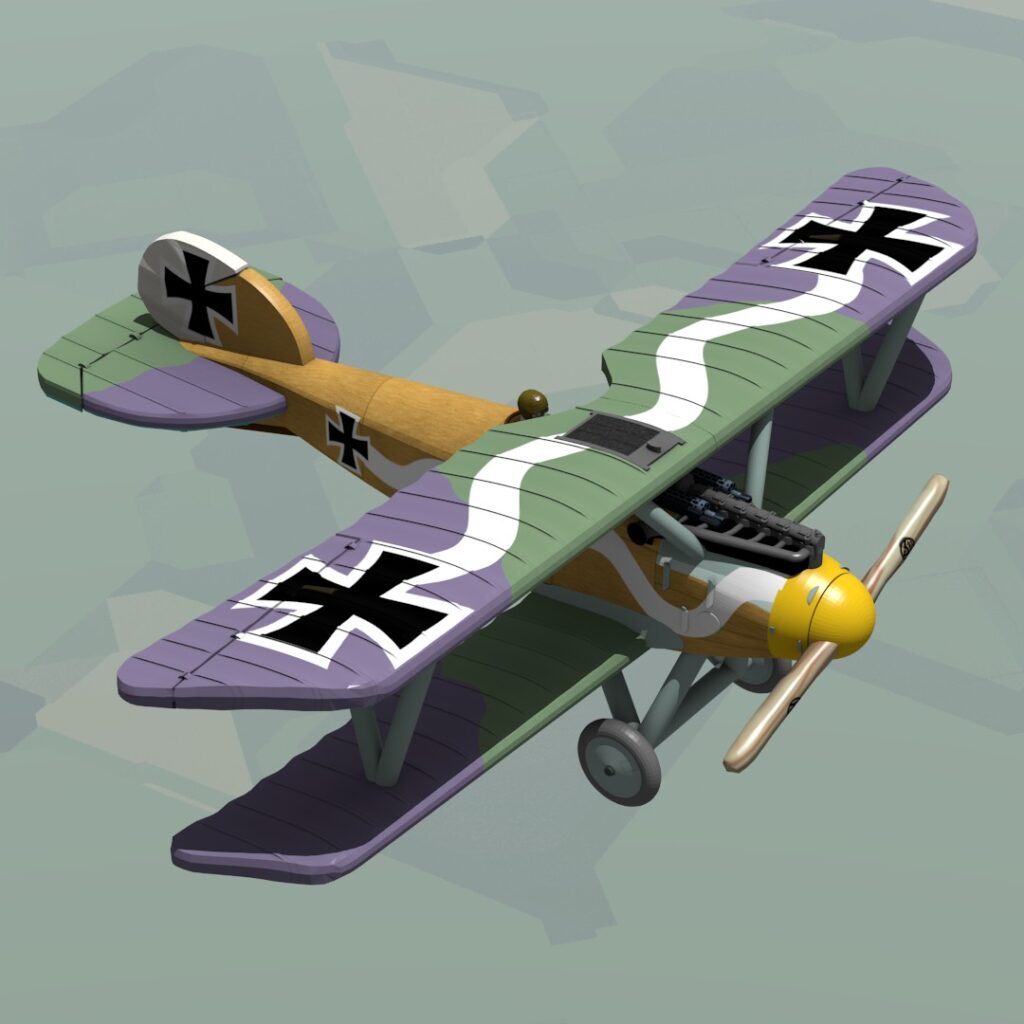
Computer render
Computer render
Posted on

New Miniatures: The German Albatros D.III

Eight full-color Albatros D.III and five paintable models were recently added to the shop. Why so many paintable versions, you might ask? The earliest model D.IIIs had the radiator centered in the wing, but it was soon moved somewhat outboard to improve sight lines and/or to reduce the chance of hot water being sprayed in the pilot’s face should the radiator be punctured. D.IIIs manufactured at Albatros’ east German affiliate O.A.W. featured a rounded rudder like that on the D.V. Finally, D.IIIs headed for the Middle East were fitted with double radiators for improved cooling in the hot conditions. Five versions covers most of those combinations.

Austria-Hungary also made wide use of the Albatros D.III design, produced in three series by the Oeffag fIrm (Oesterreichische Flugzeugfabrik A.G.). But those designs had already been added to the shop.

Computer render
Computer render